
A garage door that will not lift, suddenly feels extremely heavy, or hangs unevenly often has a broken spring. The garage door spring replacement cost depends on the door’s size, spring system, parts required, and the condition of the rest of the hardware. For Boston-area homeowners, the right repair is less about finding the lowest number and more about getting a safe, correctly balanced door that will operate reliably afterward.
Garage door springs carry most of the door’s weight. When one fails, the opener may hum without moving the door, the door may stop partway, or the cable may come off its drum. Continuing to run the opener can turn a spring repair into a larger repair involving cables, rollers, brackets, or the opener itself.
Typical Garage Door Spring Replacement Cost
For many residential doors, professional spring replacement commonly falls in the range of $200 to $500. A basic extension-spring repair may be toward the lower end when the door is standard size and the hardware is otherwise in good shape. Torsion-spring replacement, heavier insulated doors, custom doors, and jobs requiring additional hardware generally cost more.
The total usually includes the replacement spring or springs, labor, adjustment, a balance check, and a safety inspection of the moving components. A service call after normal hours, during severe weather, or for a door that is trapped in an unsafe position can add to the price. A clear estimate should explain what is being replaced and why.
A two-car garage door often uses two torsion springs. If one breaks, replacing both is usually the practical choice when they are the same age. The second spring has performed the same number of cycles and may be close to failure. Replacing only one can save money immediately, but it can lead to another service call soon after and may leave the door unevenly balanced if the springs are not properly matched.
What Changes the Cost of Replacing Garage Door Springs?
The spring itself is only one part of the repair. A technician needs to identify the correct spring size, wire diameter, length, inside diameter, and winding direction. Installing the wrong spring can cause the door to feel too heavy, rise too quickly, fail to close correctly, or place unnecessary strain on the opener.
Door Size, Weight, and Construction
A lightweight single-car steel door needs a different spring setup than a wide, insulated double door with windows. Wood doors, carriage-style doors, and commercial overhead doors can be substantially heavier. More weight requires springs with the proper lifting capacity, and that can affect both part and labor costs.
The actual weight matters more than appearance. Two doors with the same width may need very different springs based on their materials, insulation, glass, reinforcement, and hardware.
Torsion Springs vs. Extension Springs
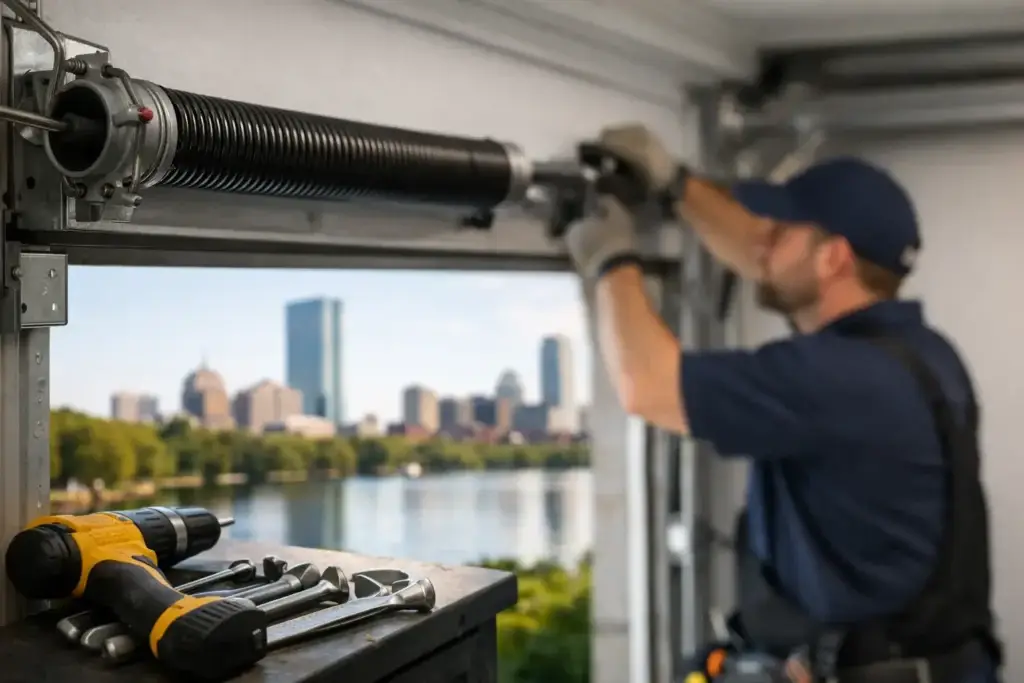
Torsion springs are mounted on a shaft above the door opening. They are common on modern residential garage doors and are generally preferred for smooth, controlled operation. Replacing torsion springs requires specialized tools, correct tensioning, and careful adjustment.
Extension springs run along the horizontal tracks on either side of the door. They can be less expensive in some cases, but they must have properly installed safety cables. Without safety cables, a broken extension spring can become a serious hazard. A technician may recommend related hardware updates if the existing system is outdated or unsafe.
Cycle Rating and Spring Quality
Standard garage door springs are often rated for about 10,000 cycles. One cycle is one full opening and closing of the door. For a household that uses the garage as its main entrance, that number can be reached sooner than many homeowners expect.
Higher-cycle springs cost more upfront but can make sense for frequently used doors. If your garage door opens and closes several times every day, choosing a longer-life spring may reduce future downtime and service costs. The right choice depends on usage, door weight, and whether the property is a primary residence, rental, or busy commercial location.
Related Repairs Found During Service
A broken spring sometimes exposes other problems that were already developing. Worn rollers, frayed cables, bent tracks, loose center bearings, damaged drums, or an opener that has been lifting an unbalanced door can all affect the repair scope.
Not every job needs additional parts. Still, repairing a spring without addressing a damaged cable or failing bearing can leave the door unsafe or cause another breakdown. The best approach is a direct diagnosis: replace what is needed now, explain what can wait, and make sure the door is balanced before the job is complete.
When a Broken Spring Becomes an Urgent Repair
A broken spring is not usually a reason to force the door open manually. A typical garage door can weigh well over 100 pounds, and a larger insulated door can weigh much more. Once the spring support is gone, the door can drop quickly or become difficult to control.
Treat the situation as urgent if the door is stuck open, partially open, off its tracks, or blocking a vehicle inside the garage. Keep children and pets away from the door, do not pull on loose cables, and avoid using the automatic opener repeatedly. If the door is closed and secure, leave it closed until it can be inspected.
A loud bang from the garage is another common sign of a torsion spring breaking. Homeowners sometimes assume the opener has failed because the remote no longer raises the door. In many cases, the opener is responding normally but cannot safely lift the full weight of the door by itself.
Why Professional Replacement Is Worth It
Garage door spring replacement is not a routine do-it-yourself project. Torsion springs are under significant stored tension. Incorrect tools, improper winding, or a slipping winding bar can cause severe injury. Extension springs also present risk when they are not secured with safety cables or when the door is unsupported.
Professional service also protects the rest of the system. The door should be tested by hand, balanced at several positions, checked for smooth travel, and adjusted so the opener is not doing work intended for the springs. This is especially useful for doors paired with LiftMaster, Chamberlain, Genie, or other automatic opener systems, where a poorly balanced door can shorten motor and gear life.
Mass Garage Doors Expert approaches spring repairs as a full operating-system check, not just a parts swap. That means confirming the door moves correctly, the cables are seated, the hardware is secure, and the opener is not being forced to compensate for a mechanical problem.
How to Avoid Another Early Spring Failure
Springs eventually wear out, but poor door condition can speed up the process. A door that binds in the tracks, has seized rollers, or is out of balance puts more strain on springs every time it operates. Annual maintenance helps identify these issues before the door stops working at the worst possible time.
Keep the tracks clear, watch for unusual noise or jerky travel, and pay attention if the door starts opening more slowly than usual. Do not apply grease to the tracks, since that can collect dirt and interfere with roller movement. A garage door technician can lubricate the appropriate moving parts, inspect spring wear, and verify that the safety systems are working properly.
If your door has become heavy, noisy, or difficult to operate, address it before it fails completely. A timely inspection can help you understand the likely garage door spring replacement cost, avoid damage to the opener, and keep your garage secure when you need it most.